
Ecovillage and Regenerative Landscape Design
Communities by design, grounded in nature
Every thriving community begins with a vision — of living closer to the land, to each other, and to what matters. We want to help you bring that vision to life. From first ideas to finished settlement, we use workshop-based planning and cutting-edge design tools to help guide the development of ecovillages and intentional communities through every stage: assessing potential land options, exploring communal governance structures, master planning, ecological site design, food forest design and shaping the layouts and infrastructure that let a village grow well.

The Importance of Good Design
Communal living spaces (often referred to as "ecovillages") require the right balance of private spaces and communal spaces to create a harmonious living environment and reduce the potential for conflict. Most people have grown up with their own sense of personal space and privacy so this is a genuine need for most people. Spacing between dwellings needs to be factored into the design process from the very beginning. Some people might be comfortable living in close proximity to other houses and will want to be close to communal spaces while others will need a greater sense of space and privacy and will choose dwellings that are more widely spaced and further away from communal spaces.
The location of communal spaces such as communal gardens, food production areas, biodiversity conservation areas, buildings, gathering places, ceremonial spaces, playgrounds and so on also needs to be carefully considered in the design process. For example, it is important to ensure that:
-
areas with inherent biodiversity conservation values or with substantial regenerative capacity are protected and enhanced
-
food production areas are matched to areas with high capability in terms of sunlight, water harvesting, soil fertility, low weed competition etc.
-
critical infrastructure such as solar power systems, water storage etc. is placed correctly
-
communal spaces do not impact on private residences in terms of noise, odour, dust etc.
-
bushfire risk is minimised and flammable vegetation is kept away from dwellings, buildings and other key infrastructure wherever possible, in accordance with relevant regulations, planning codes and overlays
The Importance of Participatory Planning
Participatory planning workshops provide the foundation of the planning process. Workshops are a great way to:
-
develop a shared vision
-
develop a sense of collective ownership over the planning process
-
share knowledge and ideas
-
ensure that the aspirations, needs and desires of the founding members are incorporated into the design.


Enabling Conditions for Thriving Ecovillages
Creating successful community settlements requires more than thoughtful site design and sustainable infrastructure. Long-term success depends on establishing the social, economic, ecological and governance foundations that enable people to live, work and thrive together.
Governance Structures
Strong governance is one of the most important foundations of any successful ecovillage or community settlement. Clear governance frameworks provide the mechanisms through which resources are shared, decisions are made, responsibilities are allocated and conflicts are resolved.
Effective governance systems establish transparent processes for managing shared assets such as food production systems, water infrastructure, renewable energy systems, community facilities, roads and common land. They also provide certainty around financial contributions, maintenance responsibilities and community expectations.
Successful communities typically seek a balance between diversity and alignment. While residents may bring different backgrounds, skills, beliefs and life experiences, it is important that they share a core set of values regarding stewardship of the land, mutual support, cooperation and community participation. This creates a foundation of trust while allowing individual differences to be respected and celebrated.
Conflict is a natural part of any human community. Rather than seeking to eliminate disagreement, resilient communities establish clear and fair processes for communication, mediation and dispute resolution. When conflict is addressed constructively, it can strengthen relationships, improve decision-making and contribute to a healthier community culture.
Community and Culture
Strong social connections are essential for creating vibrant and enduring communities.
The design of community settlements should intentionally create opportunities for people to connect through shared spaces, activities and traditions. Community halls, gathering spaces, outdoor meeting areas, communal kitchens, gardens and recreational facilities provide places where relationships can develop naturally over time.
These spaces become centres for storytelling, celebration, learning, cultural exchange, music, art and collective problem-solving. They help build a sense of belonging and identity that strengthens community resilience during times of challenge.
A healthy community culture is one where people feel valued, heard and connected to something larger than themselves. It is through these relationships that communities develop the trust and social capital needed to collaborate effectively and support one another.

Shared Livelihoods
Community settlements create opportunities to strengthen local economies by supporting livelihoods that serve the needs of residents while generating economic activity within the community.
Residents may provide services to one another in areas such as healthcare, education, food production, building maintenance, landscaping, trades, transport, administration, childcare, aged care and creative industries. This allows a greater proportion of economic value to remain within the community while fostering stronger social connections.
Shared enterprises can further enhance economic resilience. Community gardens, market gardens, orchards, agroforestry systems, native food production, value-added food processing, artisan manufacturing and ecological restoration services can provide income streams for residents while contributing to broader community goals.
Community markets and farm-gate enterprises can also create opportunities to sell food, plants, crafts and services to the wider public, strengthening local economies and building positive relationships with surrounding regions.
Shared Infrastructure and Resources
The sharing of infrastructure and resources can significantly reduce costs, improve efficiency and lower environmental impacts. Rather than every household needing to invest separately in infrastructure, community settlements can develop shared systems for renewable energy generation, battery storage, water harvesting, wastewater treatment, workshops, machinery, vehicles, internet connectivity and community facilities.
Shared off-grid energy systems often provide economies of scale that make renewable energy more affordable and reliable. Similarly, community-scale water harvesting, storage and treatment systems can increase water security while reducing dependence on centralised infrastructure.
Shared resources also reduce duplication and unnecessary consumption. A single community workshop, tool library, tractor, processing facility or community building can serve dozens of households, reducing both financial costs and environmental footprints while encouraging collaboration between residents.

Health and Wellbeing
The relationship between human wellbeing and the natural environment is increasingly recognised as a critical component of healthy communities.
Community settlements that integrate natural landscapes, food production systems, walking trails, native vegetation and restorative green spaces provide residents with daily opportunities to connect with nature. Research consistently demonstrates that regular contact with natural environments is associated with improved mental health, reduced stress, increased physical activity and stronger social cohesion.
Living in close relationship with the land also fosters a deeper understanding of ecological processes and seasonal cycles. Participation in activities such as gardening, planting, conservation work and land stewardship can contribute to a strong sense of purpose, belonging and personal fulfilment.
Equally important is the social dimension of wellbeing. Communities that encourage meaningful relationships, mutual support and shared experiences can help address the growing challenges of loneliness, social isolation and disconnection that affect many modern societies.
Food Security
Food security is becoming an increasingly important consideration in an era of climate change, ecological degradation, rising energy costs and growing supply chain vulnerabilities.
Modern industrial food systems have delivered significant productivity gains but are heavily dependent on cheap fossil fuels, long-distance transport networks, synthetic fertilisers and relatively stable climatic conditions. As these assumptions become less certain, there is increasing value in developing more localised and resilient food systems.
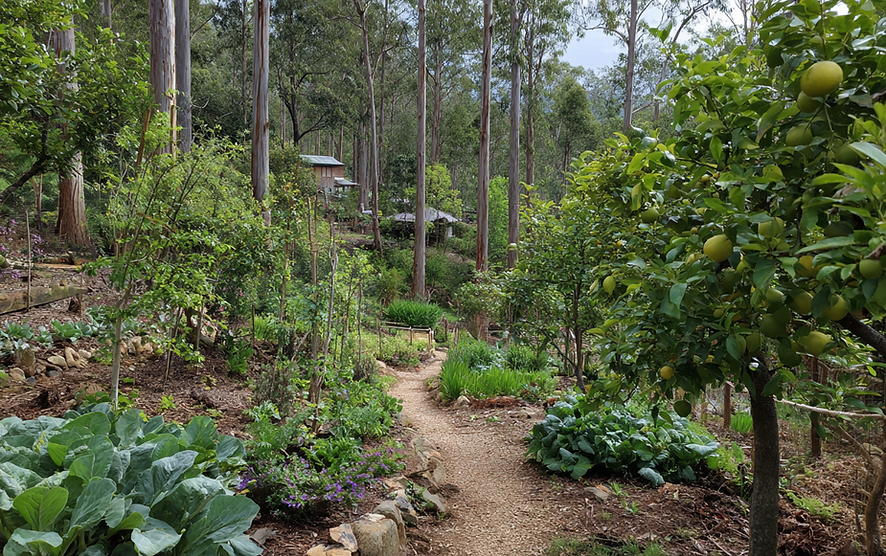
Community settlements can play an important role in this transition by integrating diverse food production systems including market gardens, orchards, food forests, agroforestry systems, livestock integration, seed saving and water-sensitive agricultural design.
Diversity is a key principle of resilience. A landscape containing a wide range of crops, perennial food systems and complementary enterprises is often better able to withstand droughts, extreme weather events, pest outbreaks and market disruptions than highly specialised systems.
By producing a meaningful proportion of their own food while maintaining strong connections with regional producers, community settlements can increase self-reliance and strengthen local food security for future generations.
Work-Life Balance
One of the most significant benefits of community living is the potential to reduce the financial and time burdens associated with conventional lifestyles.
Households can often meet many of their needs at lower cost than would be possible individually by sharing infrastructure, equipment, facilities, services and resources. Reduced living costs can lessen dependence on full-time wage employment and create greater flexibility in how people allocate their time.
This allows more time to be devoted to family, community participation, creative pursuits, education, recreation, health, volunteering and personal development. Residents may also be able to pursue part-time, seasonal or portfolio-based livelihoods that provide both financial security and a higher quality of life.
Rather than measuring prosperity solely through income and consumption, community settlements encourage a broader understanding of wealth—one that includes strong relationships, meaningful work, connection to nature, physical and mental wellbeing, and the ability to live in alignment with personal values.
When these enabling conditions are intentionally designed into a community settlement, they create the foundations for places that are not only environmentally sustainable, but also socially connected, economically resilient and deeply rewarding places to live. Such communities offer a practical pathway towards a future that balances human wellbeing with the long-term health of the landscapes upon which all life depends. 🌿
